July 14, 2026
Excavation is one of the first major steps in construction, and its quality can shape everything that follows. Before a building rises, a driveway is paved, a drainage system is installed, or underground utilities are placed, the land must be cut, cleared, graded, and prepared with precision. Good excavation accounts for soil conditions, water movement, access, depth, slope, and the way future structures or systems will interact with the ground. Because so much of this work is hidden once a project is complete, it is easy to overlook how important excavation really is. Read here to learn about seven construction projects and how expert ground preparation supports stability, safety, drainage, and long-term performance.
1. Building Foundations
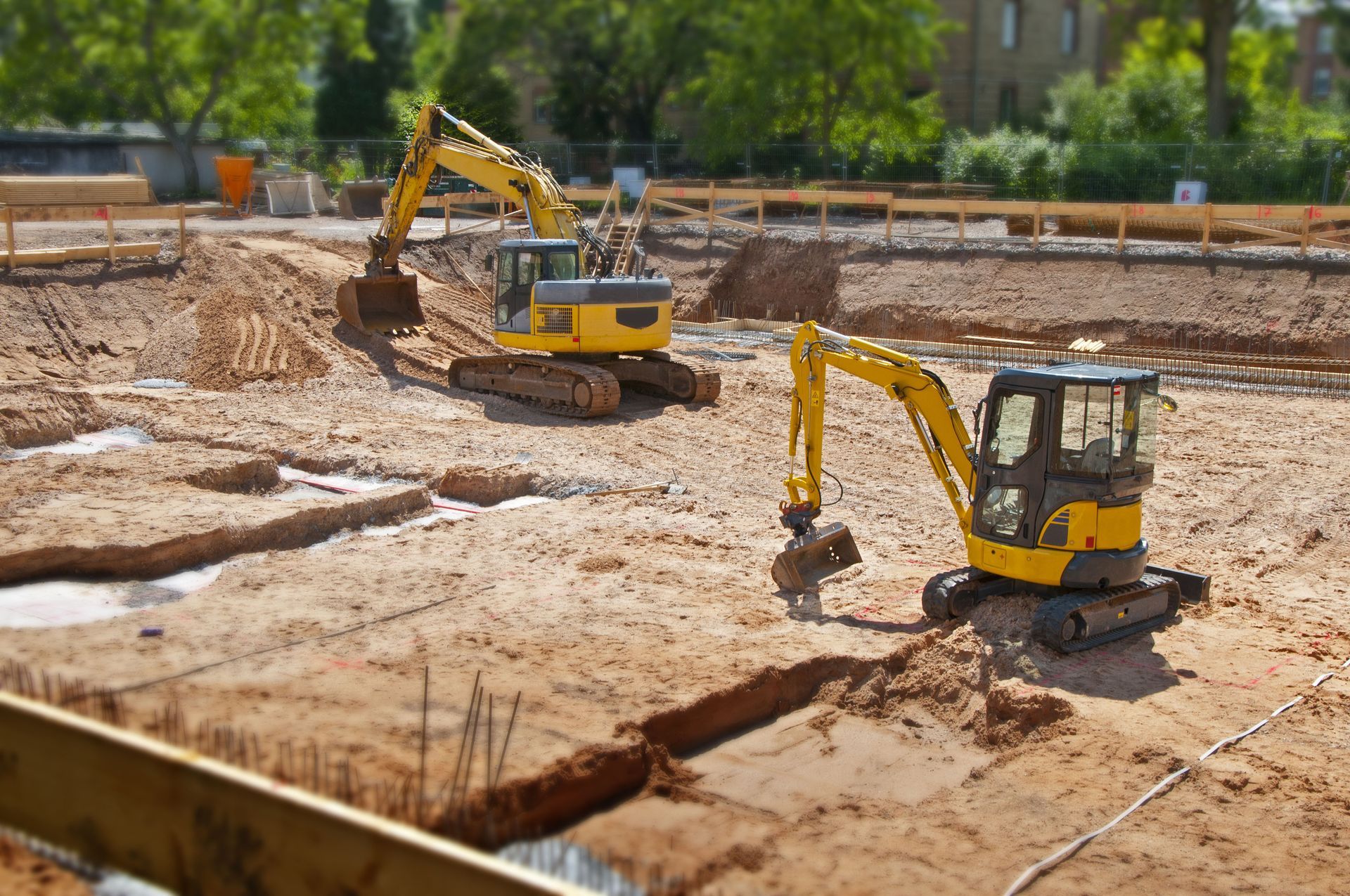
Foundation work depends on accurately prepared soil. Whether the project involves a home, addition, garage, outbuilding, or commercial structure, the ground must be excavated to the correct depth and shape before footings, walls, slabs, crawl spaces, or basements can be built. Excavating services help create the space needed for these structural components while accounting for frost depth, soil stability, site access, and drainage around the foundation area. According to This Old House, constructing a 1,000-square-foot basement typically involves excavating roughly 300 cubic yards of soil. That amount of material movement shows why foundation excavation requires more than basic digging. The work must be controlled so the building area is properly opened, the surrounding soil remains stable, and the site is ready for the next construction phase.
2. Utility Trenches
Utility trenches make it possible to place essential underground systems where they need to go. Water lines, electrical conduits, gas lines, communication cables, and drainage pipes often require trenches that follow planned routes at specific depths. Excavating services are important in this work because the trench must provide enough room for installation, inspection, bedding material, and later backfill. The path may also need to avoid existing utilities, trees, pavement, structures, or other site features. A trench that is too shallow, narrow, uneven, or poorly placed can create complications for installers and delay the broader project. Careful trench excavation helps keep underground work organized and gives other trades access to the space they need.
3. Sewage Systems
Sewage and wastewater systems rely heavily on proper grade. Sewer laterals, septic-related components, tanks, pipes, and underground drainage infrastructure must be positioned so wastewater can move as intended. Excavating services support this process by opening the ground to the necessary depth and creating space for the system layout. The surrounding soil must also be considered because buried components need stable support after installation. If the excavation does not provide consistent bedding and suitable backfill conditions, pipes or components may be more vulnerable to shifting, settling, or uneven pressure. For that reason, excavation is not just an access step in sewage work. It is part of the structural environment that helps the system remain functional over time.
4. Water Runoff Management
Managing stormwater often starts with reshaping the land. When water collects near foundations, across driveways, in low lawn areas, or around outdoor structures, excavation may be needed to redirect the flow. Excavating services can support swales, drainage channels, retention areas, culvert placement, catch basin preparation, or grading that moves water away from vulnerable areas. This kind of work requires an understanding of elevation, soil type, runoff patterns, and where water can be directed without creating problems elsewhere. The objective is not simply to move water from one location to another. Good runoff management helps protect surfaces, structures, and landscaped areas by guiding water through the site in a controlled way.
5. Demolition Preparation and Site Cleanup
Demolition projects often involve excavation before and after visible removal work. Before demolition begins, the site may need access routes, exposed foundations, opened work areas, or cleared space for equipment. After a structure, slab, pavement section, or old foundation is removed, the ground may need to be lowered, leveled, cleared of buried debris, or reshaped for future use. Excavating services can be part of this transition because demolition does not always leave behind a clean, construction-ready surface. Subsurface obstructions, uneven grades, leftover materials, and disturbed soil may all need attention. Proper excavation after demolition can help transform a rough site into a more usable area for rebuilding, drainage improvements, landscaping, or paving.
6. Landscape Excavation
Landscape excavation shapes outdoor space for both function and appearance. This type of work may create terraces, berms, planting areas, drainage routes, level lawn sections, patio bases, walkway paths, or space for retaining features. Excavating services matter in landscape work because changing grade also changes how water moves, how soil settles, and how future features fit the property. A slight slope can determine whether a patio drains properly, whether a planting bed holds too much water, or whether a lawn area remains usable after heavy rain. Landscape excavation is especially important when a property has uneven ground, compacted soil, steep transitions, or areas that need to connect smoothly with existing structures and surfaces.
7. Driveway Excavation
Driveway excavation prepares the ground for a surface that must handle repeated vehicle traffic and changing weather. Before gravel, asphalt, concrete, or pavers are installed, the existing surface may need to be stripped, lowered, graded, and prepared for the right base depth. Excavating services for driveway projects help create a stable area beneath the finished surface while accounting for slope, drainage, and soil support. This preparation affects how well the driveway sheds water and how the finished surface responds to use over time. If the base area is weak or poorly graded, the surface above it may be more likely to settle, crack, shift, or hold water. Solid excavation gives the driveway a better foundation before the final material is installed.
Why Excavation Quality Affects the Entire Project
Excavation happens early, but its effects last throughout the life of a project. A foundation excavation influences how concrete work proceeds. A utility trench affects how easily underground systems can be installed and protected. A drainage excavation shapes where water travels after storms. A driveway cut affects the strength and slope of the finished surface. Each step depends on measurements, site awareness, and preparation that align with the project's intended use. When excavation is handled carefully, other contractors can work from a more stable and predictable site.
High-quality excavation also helps reduce avoidable complications. Poorly shaped ground can lead to drainage issues, unstable surfaces, access problems, or extra work during later construction phases. Proper excavation considers not only the immediate task but also what will happen after the site is covered, paved, landscaped, or built upon. The best excavation work supports the project without drawing attention to itself once everything is complete. Its value is seen in surfaces that drain correctly, structures that have proper support, and underground systems that are placed with adequate room and protection.
Expert excavation work supports many construction projects, from foundations and utility trenches to sewage systems, drainage improvements, demolition sites, landscapes, and driveways. Each project has different requirements, but all depend on careful soil movement, accurate grading, appropriate depth, and an understanding of site conditions. For property owners, builders, and project managers, W. Rineer Excavating & Trucking LLC is here to provide excavation work that supports these projects. We prioritize precise site preparation, dependable earthmoving, and careful attention to the ground conditions that shape the success of the finished work.